What does ‘close gates behind you’ mean on Braemar estate tracks?
On a Braemar estate track, “close gates behind you” is a practical instruction, not a suggestion to tidy up after yourself. If you pass through a gate that is shut, shut it again securely. If it is open, normally leave it open unless a sign, a land manager or the condition of the gate tells you otherwise. The aim is to leave livestock, wildlife and estate operations as you found them—not to create a problem for the person who comes after you.
That small habit matters around Braemar, where easy village walks, riverside paths and higher routes share working land. A gate may separate grazing animals from a road, keep stock away from a crop or protect a particular area during a management operation. A gate left ajar can put animals at risk, damage land and create extra work for farmers and estate staff.
This guide explains what to do at gates, how that fits with your access responsibilities in Scotland, and how to plan a walk from Braemar with less driving. It also suggests short loops and quick climbs, including Morrone and its Birkwood, while keeping weather, daylight and conservation in mind.
What should you do when you reach a gate?
Use the simplest rule first: follow any sign or direct instruction, then leave the gate in the state in which you found it. If it was shut, pass through and shut it securely behind you. If it was open, leave it open unless there is a clear reason or instruction to close it. Do not assume that every gate on an estate track should be shut regardless of how you found it.
What you find What to do Why it matters A shut gate Open it carefully, pass through and close it securely. It may be containing livestock or protecting an area. An open gate Usually leave it open, unless signs or a land manager say otherwise. The open position may be part of the current stock or estate arrangement. A gate with a sign or lock Follow the instruction. Do not force a lock or climb a closed gate if a suitable route is available. There may be a temporary restriction, operation or safety issue. A damaged or awkward gate Use care, avoid making damage worse and report a significant problem to the relevant land manager if practical. A gate that will not latch can allow stock to escape even when you intended to close it.Check that a closed gate has actually latched. Do not wedge it open with a stick, tie it to a fence or leave it swinging in the wind. If a gate is difficult to operate, take a moment to work out how it opens rather than forcing it. Keep dogs close and under control while you pass, particularly where sheep or cattle are present.
Access rights come with responsibilities
In Scotland, responsible access is guided by the Scottish Outdoor Access Code. Access rights apply to most land and inland water, but they depend on acting responsibly and respecting the interests of other people, wildlife and the land. Respect land management by following reasonable signs, avoiding unnecessary disturbance and taking particular care around farm animals and estate work.
That does not mean walkers must avoid every working track or field. It means using judgement and being considerate. Keep to a suitable route where one exists, avoid disturbing animals, and give machinery and land workers space. Do not enter buildings, gardens or other places where access rights do not apply. If an area is temporarily closed or a sign identifies a specific hazard or operation, take another route.
Dogs need special attention. Keep them under close control around livestock and wildlife; in some situations that means using a lead. If cattle behave defensively, especially when calves are present, do not put yourself or your dog in danger. Let the dog go if necessary, move away calmly and report any incident afterwards. Never allow a dog to chase stock.
The gate is one visible part of those access responsibilities. Other good habits include taking litter home, avoiding damage to fences and walls, keeping to paths where ground is vulnerable, and leaving gates and stiles usable for the next person. Estate tracks are not simply recreational routes: they are part of a working landscape.

Braemar: a good base for low-driving walks
Braemar makes an excellent base if you want to spend more time walking and less time driving. Several short outings begin in or close to the village, and a day can be planned around local paths rather than a long approach to a distant car park. That is especially useful when the weather window is short, daylight is limited, or the forecast makes a high mountain day a poor choice.
For route ideas, consult the Cairngorms National Park Authority community paths leaflet. It is a useful starting point for village and local path options, but check the current route information on the ground as well: paths, signs and access arrangements can change. A leaflet is not a substitute for checking conditions, carrying a map and knowing where a route goes.
Short village and riverside loops
A short walk around Braemar can be a worthwhile outing in its own right, not just a warm-up before a hill. Choose a village and riverside loop from the community paths leaflet, allowing time to enjoy the setting and to return by a different suitable path where the mapped options permit. The River Dee and the surrounding wooded ground give a gentler perspective on the landscape than a summit route.
Keep riverside paths in context. After heavy rain, banks and paths may be muddy or slippery, and water levels can rise quickly. Do not cross a flooded track or use an unstable riverbank as a shortcut. If you are linking paths through grazing ground, check for stock and apply the gate rule at every boundary. A short loop is a good option for a changeable day, a family walk or an arrival afternoon when there is not enough time for a longer outing.
Make a small walk a well-planned walk
- Check the route on a current map and note where it meets roads, riverbanks and estate tracks.
- Allow time to stop, turn back or choose a lower alternative if conditions deteriorate.
- Carry a waterproof layer, suitable footwear, water and a charged phone; do not rely on mobile reception.
- Keep dogs under control around stock and leave gates as you found them.
Quick climbs with big viewpoints
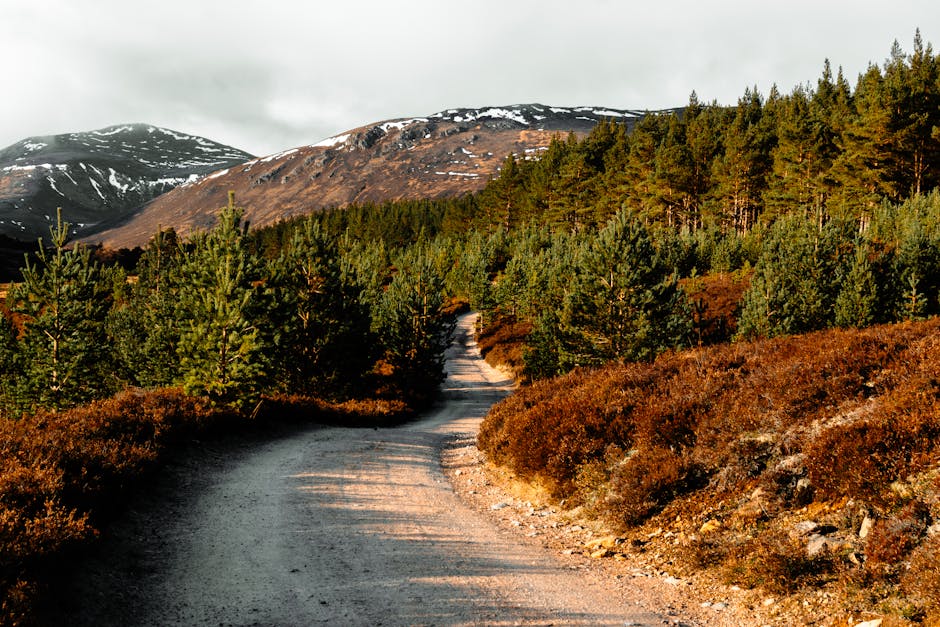
When the forecast allows, a climb above Braemar can deliver a striking view without requiring a long drive to a trailhead. Morrone is the obvious local hill: its elevated position gives a broad outlook over the village and surrounding Deeside landscape. It is still a hill day, not merely a stroll. Weather can change quickly, and cloud, wind, rain or ice can make the route more demanding than it looks from below.
Choose a route using a map and current local information, and be realistic about the time available. A short climb can still involve steep ground, wet paths and exposure to wind. Set a turnaround time before setting off, particularly in winter or late in the day. If the summit is in cloud or the wind is stronger than expected, a lower walk may be the better choice.
Check the mountain weather forecast before leaving, paying attention to wind speed and direction, precipitation, temperature, freezing levels and the timing of any deterioration. Forecasts are guidance, not guarantees: compare them with what you see and feel on the hill. In winter, consider whether you have the skills and equipment for snow and ice, and choose a route that matches your experience. If not, stay on a lower path.
Morrone Birkwood: enjoy it with care
The slopes around Morrone include the Birkwood, a valued area of woodland and habitat. It adds more than scenery to a walk: it is part of a living landscape where plants and wildlife can be sensitive to trampling and disturbance. Keep to established paths where possible, avoid damaging vegetation to make a shortcut, and take care not to leave litter or food waste.
Conservation and access can sit alongside one another when visitors make low-impact choices. Respect any signs about management or sensitive areas, keep dogs under control and avoid disturbing wildlife. Do not pick plants or remove natural material. If a path is muddy, widening the route by walking around the edge can damage the ground and vegetation; use the established line where it is safe to do so, or turn back if conditions make it unsuitable.
Conditions in woodland and on open hill can differ. A sheltered path may feel calm while the fionaoutdoors.co higher slopes are windy or cloud-covered. Plan the outing for the conditions you are likely to meet across the whole route, not just those at the village start.
Planning around weather and daylight
In Deeside, a flexible plan is often the most useful plan. Check the mountain weather forecast and the time of sunset, then choose a route with a sensible lower-level alternative. If cloud, wind or rain makes a climb unappealing, stay with a village or riverside loop. If the forecast gives a clear, stable window, make the most of it—but keep enough daylight in reserve to walk back without rushing.
- Choose the outing: use the Cairngorms National Park Authority community paths leaflet for local walking ideas, and a current map for navigation.
- Check the conditions: look at the mountain weather forecast, daylight and any relevant local notices.
- Pack for the route: bring suitable clothing, footwear, food and water, plus navigation and a means of communication.
- Adapt on the day: turn back or switch to a lower walk if conditions, visibility or energy levels are not as expected.
- Leave things as found: close gates that were shut, leave open gates open unless instructed otherwise, and respect land management.
The simple answer
“Close gates behind you” means making sure a gate you found shut is shut again after you pass through. If it was open, generally leave it open, unless signs or a land manager give a different instruction. Close it securely, keep dogs under control and treat every gate as part of a working farm or estate boundary.
That small act helps protect livestock, wildlife and the people who manage the land. Combined with responsible access, a weather-aware plan and low-impact choices in places such as Morrone Birkwood, it helps keep Braemar a welcoming base for everything from a short riverside loop to a quick climb with a memorable view.